
The debate about Kenya's presidential term limits is important, but perhaps we are asking the wrong question.
Showing posts with label Economy. Show all posts
Showing posts with label Economy. Show all posts
Sunday, September 6, 2026
OPINION: The Real Leadership Reform Kenya Needs Is Continuity, Not Longer Presidential Terms
Wednesday, May 13, 2026
Kenya’s Rising Tide of Financial Scams: The "Early Bird" Trap: Why Kenyans Keep Falling for Ponzi Schemes and How to Protect Yourself
Anyone can fall victim. Learn how scams operate, spot the red flags, and protect your money.
By Ruzeki | Shadoww News | May 13, 2026
Kenya has a long history of financial scams and pyramid schemes, with over 500 distinct schemes reported between 2015 and 2025, collectively fleecing millions of Kenyans of over KSh 50 billion. These scams continuously evolve, promising high returns with minimal risk, yet leaving countless victims in financial ruin.
Every few months, a new “scheme” emerges. Despite the red flags, many still fall prey. Understanding these scams is crucial to avoiding them.
Recent Ponzi and Pyramid Schemes in Kenya (2015–Present)
Notable Cases
MMM Kenya: A local branch of the global MMM pyramid scheme, which promised high returns before collapsing.
Crowd1: A network marketing scam promoting digital packages, leaving investors with massive losses.
Bitstream Circle: A cryptocurrency scam that defrauded investors of roughly KSh 1 billion.
Public Likes: A website promising money for viewing advertisements.
Goldenscapes Group: Focused on greenhouse investments that failed to pay investors.
Velox 10 Global: A high-yield investment scheme that defrauded investors of millions.
Amazon Web Worker: A fake app claiming affiliation with Amazon, operating as a Ponzi scheme.
Campus Scams like the famous TTU's LA scheme: University students are frequent targets due to financial vulnerability and reliance on social media. Schemes exploit the “online side hustle” culture, promising pocket money with minimal effort.
Why Kenyans Fall for Ponzi Schemes
Kenyans often join Ponzi schemes not because they are fooled, but because they think they’re “smarter” than the system.
The belief is:
“If I join early, I’ll profit before it collapses.”
But here’s the truth:
You’re not investing, you’re passing a ticking time bomb to the next person.
Eventually, the “early bird” becomes just another victim of a multi-billion-shilling industry built on greed.
From MMM, LA, and Public Likes to BTCM and Bitstream Circle, the names change but the math doesn’t.
Hall of Shame: Kenya’s Biggest Scams
Work-from-Home Baits
Amazon Web Worker
Synergy Traffic
Public Likes
Crypto and Digital Scams
Nurucoin
Bitstream Circle
BTCM
Network Marketing Legends
AIM Global
Crowd1
LA
Joining a known scam in hopes of being early doesn’t make you an investor, it makes you a participant in fraud that often targets friends and family.
True wealth isn’t built on a sinking ship.
Evolution of Kenyan Financial Scams
Since 2014, scams have shifted from traditional cash pooling to digital and asset-backed frauds. Between 2021–2025, billions were lost to cryptocurrency-linked scams and fraudulent investment cooperatives.
Digital and Cryptocurrency Scams
CBEX Scandal: Claimed to double investments in 30 days, collected nearly KSh 100 billion from Kenya and Nigeria before collapsing in 2025.
Bitstream Circle: Collapsed in 2021/2022, defrauding 10,000 members of ~KSh 1 billion.
BTCM: Crypto mining scheme promising 188–350% returns, collapsed in July 2023.
Optcoin: Locked accounts in 2025 and demanded KSh 24,000 “recovery fees.”
Nurucoin: Marketed by a pastor, defrauded 11,000 Kenyans of KSh 2.7 billion.
Asset-Backed and Cooperative Frauds
Ekeza Sacco & Gakuyo Real Estate: Land-based scheme defrauding thousands.
SIC Investment Cooperative: Land cooperative facing fraud allegations and a KSh 600 million shortfall in 2025.
Goldenscapes Group: Agribusiness scam promising high returns from greenhouse farming.
Pascalene Peter Loan Scheme: Promised high-interest returns, conned hundreds of KSh 300 million.
Emerging Frauds
Openendo Welfare Society: Alleged fake donor funding scams in 2025.
Spring Mark Investment: Eldoret-based pyramid scheme disappeared in 2023.
Affluent Wealth Managers: Investigated for a KSh 500 million fake life insurance scam in 2025.
eCitizen Diversion: Auditor-General’s report revealed KSh 1.8 billion misappropriated from government digital payments.
How to Spot and Avoid Financial Scams in Kenya
The Central Bank of Kenya (CBK) warns against any investment that seems too good to be true:
Promises of high returns (>30%) in a short time.
Earning more from recruiting others than the product itself—classic pyramid sign.
High-pressure tactics urging immediate action.
No official licensing—always check registration with the Capital Markets Authority (CMA) or CBK.
For detailed guidance, visit the CBK Fraud Safety page.
Scams evolve, but human greed doesn’t. The fastest way to protect yourself is knowledge, caution, and skepticism. Don’t chase the myth of instant wealth; invest wisely, legally, and safely.
Follow Shadoww News
Stay updated on the latest geopolitical developments, local commentaries and analysis on: Facebook, X/Twitter, YouTube, Bluesky and TikTok.
Sunday, April 19, 2026
The Decline of the American Empire and the Rise of a New Global Order
From fractured alliances to the petroyuan, the world is witnessing a historic shift in power and influence.
By Ruzeki | Shadoww News | April 19, 2026
What's happening in 2026
The geopolitical landscape in 2026 is almost unrecognizable compared to just a few years ago. Under Donald Trump’s chaotic regime, the United States is facing an unprecedented level of international isolation and strategic pushback, challenging the very foundations of its decades-long global dominance.
Key events; from military miscalculations to economic policy shifts, have accelerated a historic reshaping of military, economic, and strategic power. Experts warn that the U.S. has approached a tipping point in its global influence, as rival powers consolidate and assert themselves with unprecedented confidence.
Fractured Alliances: NATO and Europe Push Back
Once-solid alliances are showing cracks. NATO and European partners are increasingly distancing themselves from Washington’s unilateral military decisions. Countries like Germany, France, Spain, the U.K and Italy have openly questioned U.S. strategic priorities, particularly in the Middle East and Central America, signaling deep dissatisfaction with Trump’s approach.
Analysts suggest that this rift may not be temporary, long-term trust has eroded. The implications are profound: the U.S. can no longer assume automatic military or political support from its traditional allies, forcing Washington to reconsider how it projects power globally. Additionally, independent European defense and economic initiatives like engaging with China are accelerating, signaling a gradual move toward strategic shift.
Middle East Tensions Escalate to Historic Levels
The Middle East has entered a volatile new phase. An unprovoked U.S.-Israel missile campaign in Iran resulted in the assassination of Iranian Supreme Leader Ayatollah Khamenei, top military generals, and hundreds of civilians, including schoolchildren. Iran responded swiftly, targeting U.S. bases and energy infrastructure across Saudi Arabia, Iraq, Qatar, Kuwait, Bahrain, and the UAE, as well as Israel itself. The strikes have inflicted heavy losses on American forces and allies, raising serious questions about U.S. military supremacy in the region.
In the aftermath, Gulf nations have begun withdrawing support for U.S. operations, closing bases, and restricting airspace access. This represents a dramatic reversal of decades of strategic partnerships and has left the U.S. with diminished operational freedom in a region it has dominated for decades.
Analysts warn that these changes could permanently alter power dynamics in the Middle East, emboldening regional powers like Iran and potentially sparking new alliances that bypass U.S. imperialism.
Iran Controls the Strait of Hormuz
Iran has asserted unprecedented control over the Strait of Hormuz, a crucial chokepoint through which approximately 20% of global oil passes. Tehran now enforces strict transit rules and collects tolls from vessels navigating the Strait, with fees mandated in Chinese yuan rather than U.S. dollars. This move is a direct challenge to the petrodollar system that has underpinned American financial dominance for six decades.
The implications extend far beyond energy markets. By controlling this strategic chokepoint, Iran can influence global oil supply and pricing while asserting its geopolitical weight. International shipping companies and energy-dependent nations are now forced to navigate this new reality, potentially reshaping maritime security, trade alliances, and global economic dependencies.
The Rise of the Petroyuan
The shift from dollar-based oil transactions to yuan-based trade is accelerating a transformation in global finance. BRICS+ bloc has been planning for this shift for years. Major oil producers are now increasingly conducting transactions in Chinese yuan, undermining the supremacy of the U.S. dollar. Economists warn that the petroyuan is not merely a symbolic gesture, it represents a structural challenge to American financial influence.
This trend may encourage other nations to diversify their reserves and trade arrangements, weakening the dollar’s role as the world’s primary reserve currency. In addition, China’s growing influence in energy markets is redefining economic power balances, allowing Beijing to leverage its currency and strategic partnerships for global political influence.
A Multipolar World Emerges
The events of 2026 mark a historic turning point. America’s influence is waning, traditional alliances are fracturing, and emerging powers, most notably China, Russia, and Iran, are asserting themselves on the global stage. The world is moving toward a true multipolar era, where no single nation dominates across military, economic, and strategic dimensions.
This emerging order will require nations to navigate a far more complex geopolitical landscape. For the United States, adapting to this new reality will demand strategic recalibration back at home where Democrats must win, diplomatic finesse, and an acknowledgment that its historical leverage is no longer guaranteed.
Meanwhile, other nations like Canada, Spain, Brazil, South Africa, North Korea, China, and Pakistan are seizing the opportunity to reshape global norms, trade, and security arrangements in ways that reflect their interests rather than those of the former hegemon.
Follow Shadoww News
Stay updated on the latest geopolitical developments, commentaries and analysis on: Facebook, X/Twitter, YouTube, Bluesky and TikTok.
Friday, January 30, 2026
Over 227 Killed in DRC Mine Collapse: A Tragic Wake-Up Call for Safer Mining Practices
227 Killed in DRC Mine Collapse!
By Ruzeki | Shadoww News |January 30, 2026
Wednesday, July 23, 2025
🔥 1 Kings 12:1–24:- A Prophetic Mirror for Kenyan Politics Today🚨
By Ruzeki, Shadoww News
July 23, 2025

July 23, 2025
Here’s how 1 Kings 12:1–24 can be directly and powerfully interpreted in light of current Kenyan politics, especially post-Gen Z protests, economic frustrations, leadership arrogance, and political fragmentation:

1 Kings 12:1–24 is a Prophetic Mirror for Kenyan Politics Today
In 1 Kings 12, King Rehoboam takes over from his father Solomon. The people beg him to reduce the burden of heavy taxes and labor. Instead of listening to experienced elders, he consults arrogant peers and threatens the people with harsher rule. The result? National rebellion, division, and the loss of ten tribes under a new leader, Jeroboam.
🇰🇪 Relevance to Present-Day Kenya:
1. The People are Crying for Relief (v. 4):
“Your father put a heavy yoke on us… lighten the harsh labor…”
Just like the Israelites, Kenyans are crying out:
– "Cost of living is unbearable."
– "Taxes are choking us."
– "We are overburdened by corruption and economic injustice."
Gen Z and the youth-led protests have echoed the same biblical plea:
"Lighten the yoke, and we will serve."
2. Two Kinds of Advisors – Elders vs. Cronies (vv. 6–11):
Rehoboam had a choice:
- Wise elders urged him to listen, serve, and win the people’s hearts.
- Entitled friends told him to flex power, threaten, and rule by fear.
In Kenya today, leaders are surrounded by out-of-touch advisors, insulated from the people’s pain, pushing arrogance over humility; provoking rage rather than respect and the rule of law.
3. Arrogance Ignites Rebellion (vv. 13–16):
“My father scourged you with whips; I will scourge you with scorpions.”
Rehoboam’s tone mirrors many Kenyan leaders who respond to protest with contempt and brutality.
When peaceful dissent is met with violence or mockery, the result is always the same:
Rebellion. Loss of legitimacy. Disowning of leadership.
"To your tents, O Israel!" sounds a lot like:
"We have no share in this corrupt leadership!"
#RutoMustGo or #WanTam isn't just a slogan; it's a warning of detachment.
4. A Nation Divided – Politically and Spiritually (vv. 17–20):
When Rehoboam failed to listen, ten tribes broke away.
Today, Kenya faces a similar danger of national disintegration; not geographically, but in spirit and trust.
Faith in government is eroding. A new generation is redefining allegiance, not by tribe, but by truth, justice, and accountability.
5. God's Word: “Do Not Fight Your Brothers” (vv. 22–24):
Rehoboam planned war to crush the uprising, but God warned:
“Do not go to war against your fellow Israelites. This is my doing.”
To Kenyan leaders, security agencies, and even citizens allied to both Tutam and WanTam factions:
📢 Let there be no civil war.
📢 No blood should be shed for ego or pride.
📢 Sometimes, rebellion is divine correction.
Final Reflection💥✊🏾:
Just like in 1 Kings 12, Kenya is at a crossroads.
- Will the leaders humble themselves and listen?
- Will they choose wise counsel over yes-men?
- Will they lighten the yoke or harden their hearts?
God is still speaking:
“This is my doing.”
What’s happening in Kenya is not just politics; it’s divine disruption. A season of reckoning. A call to repent, reform, and serve.
Rehoboam represents President Ruto. A leader who had the chance to ease the people’s burden but chose pride, arrogance, and the counsel of the privileged few. Jeroboam, on the other hand, represents the opposition and the rising public dissent; a movement born out of ignored cries and injustice.
Kenya stands at a pivotal moment, just like Israel did. The message is clear: when leaders refuse to listen, the people will withdraw their loyalty, and a new chapter will begin; i.e with or without them.
Sunday, June 1, 2025
Stay Informed: Top Global News Channels You Should Follow
By Ruzeki, Shadoww News
June 01, 2025
In a world where information is power, staying updated with credible global news is more important than ever. Whether you're tracking international politics, economics, or major social movements, here are the most trusted news channels from around the world you should follow:
🌍 International Mainstream Media:
CNN (Cable News Network, U.S.): Known for breaking news and in-depth analysis.
NBC News (National Broadcasting Company, U.S): Offers mainstream news and powerful political commentary.
MSNBC News (Microsoft National Broadcast Corporation, U.S.): Offers mainstream news plus unique political commentary.
BBC (British Broadcasting Corporation, UK): Local and global coverage with a balanced tone.
Reuters (Canada): Leading source of global news. Wire services trusted for accuracy and speed. HIGHLY RECOMMENDED!
Associated Press (AP, U.S.): Wire services trusted for accuracy and speed. HIGHLY RECOMMENDED!
France24 (France): Great for global affairs, especially Europe and Africa.
Deutsche Welle (DW, Germany): Global news with a European perspective.
WION (India): "World Is One News" — emerging as a global player with a non-Western lens.
TASS (Russia): State-run, but gives insight into Russian framing of global events.
CGTN (China Global Television Network): China’s official English-language news outlet.
🌏 Other Regional Powerhouses:
Press TV (Iran): State media offering Iran’s view on international affairs.
Ahram Online (Egypt): One of the top English-language news sources from the Arab world.
NTV Kenya: Key sources for East African and Kenyan national news. Others include KTN and K24.
eNCA (South Africa): Leading English-language news broadcaster in Southern Africa.
For balanced understanding, follow outlets from different regions. It helps you cut through bias and form an informed worldview.
Thursday, March 20, 2025
America on the Brink: How Trump’s Policies Are Fueling Economic Decline
By Ruzeki, Shadoww News
March 20, 2025
March 20, 2025
Trump is dragging America to the brink of a full-blown recession—rising inflation, stock market crashes, and economic instability are just the beginning.
In just two months of his so-called "concepts of a plan," the U.S. has gone from a pillar of economic strength to a volatile and unpredictable trading partner. Once the world's top investment destination, America is now hemorrhaging credibility. Global markets are rattled, investors are pulling back, and businesses are bracing for impact.
Trump's reckless trade wars and destructive tariffs—haphazardly imposed on China, Europe, Canada, Japan, and Mexico—are suffocating industries at home while alienating allies abroad. His erratic DOGE-driven policies turn Wall Street into a casino, where economic forecasts shift on the whims of a tweet. Meanwhile, his decision to gut USAID programs, particularly in Africa, is dismantling decades of U.S. diplomatic leverage, eroding America’s soft power, and accelerating its decline in global influence.
With these business-hostile policies, Trump is achieving only one thing: the immiseration of Americans. Jobs are vanishing, wages are stagnating, and prices are soaring—all while he insists it’s “worth it.”
The world is losing faith in U.S. assets. Investors no longer see America as the safe bet it once was. And since power abhors a vacuum, others are stepping in.
China is tightening its grip on global trade. Europe is forging new alliances. BRICS+ is rising. The geopolitical landscape is shifting—and under Trump, America is slipping from the throne.
Thursday, August 24, 2023
New World Order: BRICS bloc welcomes six new members
Summary
- BRICS adds Argentina, Egypt, Ethiopia, Iran, Saudi Arabia and UAE.
- Expansion boost BRICS global strength.
- Group leaves door open to further expansion, especially for the Global South.
- BRICS bloc makes 27 percent of the global economy and 46 percent of the world population.
Johannesburg, Aug 24 - The BRICS bloc of major emerging economies agreed on Thursday to admit Argentina, Egypt, Ethiopia, Iran, Saudi Arabia and the United Arab Emirates in a move aimed at accelerating its push to reshuffle a world order it sees as outdated.
In deciding in favour of an expansion, the bloc's first in 13 years, BRICS leaders left the door open to future expansion as dozens more countries voiced desires to join a grouping they hope can level the global playing field.
The BRICS group makes decisions by consensus. On Thursday, it agreed on the guiding principles, standards, criteria and procedures of the BRICS expansion process.
The expansion adds economic muscle to BRICS, whose current core members are China, the world's second largest economy, as well as Brazil, Russia, India and South Africa.
The expansion of the group is part of its plan to build dominance and reshape global governance into a multipolar world order that puts voices of the Global South at the centre of the world agenda.
According to the Chinese President Xi Jinping, the membership expansion was historic. It shows the determination of BRICS countries for unity and cooperation with the broader developing nations.
BRICS was originally BRIC, an acronym coined by Goldman Sachs chief economist Jim O'Neill in 2001, the bloc was founded as an informal four-nation club in 2009 and added South Africa a year later in its only previous expansion.
The six new members will formally become members on January 1, 2024, South African President Cyril Ramaphosa said when he named the countries during a three-day XV BRICS summit he is hosting in Johannesburg.
According to President Ramaphosa, BRICS has embarked on a new chapter in its effort to build a world that is fair, a world that is just, a world that is also inclusive and prosperous. He confirmed that the five core BRICS members had consensus on the first phase of the expansion process and other phases will follow.
Friends and Allies lead candidates
The countries invited to join reflect individual BRICS members' desires to bring allies into the bloc.
Brazilian President Luiz Inacio Lula da Silva had vocally lobbied for neighbour Argentina's inclusion while Egypt has close commercial ties with Russia and India.
The entry of oil superpowers Saudi Arabia and UAE highlights their drift away from the United States' orbit and ambition to become global heavyweights in their own right.
Russia and Iran have found common cause in their shared struggle against the U.S.-led sanctions and diplomatic isolation, with their economic ties deepening in the wake of Moscow's special military operation in Ukraine.
On Thursday, the Russian President Vladimir Putin said BRICS is not competing with anyone. President Putin is attending the summit remotely due to an international warrant for alleged war crimes. He's being represented by the world's most vocal diplomat FM Lavrov.
Mr Putin acknowledged that the process of the emerging of a new world order still has fierce opponent. He believes the de-dollarization is irreversible.
Iran's President Ebrahim Raisi celebrated his country's BRICS invitation with a swipe at Washington, saying on Iranian television network that the expansion "shows that the unilateral approach is on the way to decay".
Beijing is close to Ethiopia and the country's inclusion also speaks to South Africa's desire to amplify Africa's voice in global affairs.
More than 40 countries had expressed desire in joining BRICS, and 23 formally applied to join the bloc.
Some 50 other heads of state and leaders attended the XV BRICS Summit in South Africa, which concluded on Thursday.
Ambitions and Results
United Nations Secretary-General Antonio Guterres attended the Thursday's expansion announcement, reflecting the bloc's growing influence. He echoed BRICS' long-standing calls for reforms of the U.N. Security Council, International Monetary Fund, World Bank and other global governance structures.
BRICS is now home to 46% of the world's population and 27 percent of global gross domestic product.
Bloc heavyweight China has long called for an expansion of BRICS as it seeks to challenge Western dominance, a strategy shared by Russia.
Other BRICS members support fostering the creation of a multi-polar global order. But Brazil and India have both also been forging closer ties with the West.
For 80 years, the United States dollar has dominated all other currencies. But BRICS is tired of the West’s looming presence over global governance and finance. The bloc is determined to take it down.
President Vladimir Putin said on Tuesday in a virtual address to the BRICS summit, that the process of de-dollarisation is “irreversible” and “gaining pace".
The US weaponises the dollar in the Russian and Iran sanctions, there is increasing desire by other developing countries to seek alternative currencies for trade, investment, and reserves, as well as developing alternative multilateral clearance systems outside of SWIFT.
Wednesday, August 2, 2023
Africa-Russia Summit: Africa Turn Towards Russia for strong economic, diplomatic and security relations
By Ruzeki, Shadow News.
What are the prospects for cooperation between Russia and Africa?
The areas of increased co-operation between Russia and Africa are in the areas of agriculture, energy, security, education and health.
-What are the challenges and advantages of Africa-Russia cooperation?
Apart from Western countries putting pressure on Africa not to cooperate with Russia, the other challenges which Russia faces, regarding increasing co-operation in Africa is logistical, financial and infrastructure. The West has the advantage of dominating certain African nations economically.
Now, the advantages that Russia has unlike Western nations is historical and cultural, Russia was never involved in colonialising Africa and during the cold war, contributed to a number of African nations gaining independence from former western colonial powers.
-What are the positive aspects of the Russia-Africa Summit memorandum?
- The positive aspects of the recent Russia-Africa Forum were 4 joint declarations signed between Russia and all heads of states, including the head of the African Union.
Moreover, Russia planning to increase the number of embassies in Africa, where since the 1990s, was closed down.
Additionally, Russia announced it will provide grain for free after its withdrawal from the Black Sea grain deal, where Africa was provided with little to no grain. Importantly, Russia announced it would write off a total of $23 billion in debt obligations.
Russia will continue grain supplies to the African continent. Actually, in 3-4 months, free grain will be sent to Africa.
The potential stumbling blocks to Russia’s ability to deliver grain is logistics, considering the risks of undersea drone attacks in the Black Sea by the Ukraine forces.
The way to overcome this is potential setback is to increase the transit of grain via the North-South Transport Corridor to have a secure route to facilitate deliveries to Africa.
- Reasons why a number of countries on the African continent are preparing to join the BRICS and prefer to cooperate not with Europe and the United States, but with Russia, China and their allies.
The main reasons why BRICS looks attractive for the number of African nations wanting to join is economics. Especially, as each nation has undergone the same or similar experience of development (neo-liberalism and its disastrous effects).
BRICS has surpassed the G7 in terms of total GDP value and wealth. The group members never interfere with a nation’s internal affairs. Especially, as certain western nations which have historically and to this day, continue to openly sponsor colour revolutions to topple governments, and force controversial policies on nations which don’t abide by their demands.
The emergence of new multilateral institutions such as the BRICS new development bank, African Development Bank and Asian Investment Infrastructure Bank, provides a new source of funding to support key projects in African nations and breaks the monopoly of financial loaning from the World Bank and in the worst-case scenario, the I.M.F.
Each member of the BRICS has played a key role in supporting the interests of African nations at other multilateral institutions such as the G20, supporting the application of the African Union to become a member.
- How could Africa-Russia improve interaction in the cultural sphere?
Russia must increase its cultural exchanges in education, sports, art and media. As these kind of exchanges are necessary to understand what makes each nation unique and areas of cooperation.
- What is BRICS to Africa?
For Africns, the BRICS bloc provide alternative economic development models for other developing nations to pursue, instead of the failed neo-liberal policies which continue to be promoted by western nations despite the failed promises of neo-liberalist policies in Africa.
Thursday, June 8, 2023
De-dollarization of the World Economy is underway and it is gaining momentum!
By Ruzeki, Shadow News
08 June 2023, Nairobi
- One of the most intriguing financial trends of 2023 is the de-dollarization movement led by Russia, Brazil, India, China, Africa, Saudi Arabia and Iran. This is an effort to reduce the role of the U.S. dollar in international trade.
- Rivalry with China, fallout from Russia-Ukraine war and the recent wrangling in Washington over the U.S. debt ceiling have put the dollar's status as the world's dominant currency under fresh scrutiny.
- Russia's sanctions-imposed exile from global financial systems last year also fuelled speculation that non-U.S. allies would diversify away from dollars.
- De-dollarization, which is the decline of the United States dollar as the world’s dominant reserved currency, is underway, and it’s gaining momentum all over the world.
For over 100 years, the U.S. dollar has been the world reserve currency, which means it has been the dominant foreign currency held by central banks to carry out international transactions and settle international debt.
However, in the last 20 years, the dollar’s dominance in countries’ reserves has decreased from 70% to 58%, according to the International Monetary Fund.
This trend has been accelerating since 2022, when the U.S. and its NATO allies froze Russia’s dollar reserve as a response of the country’s special operation in Ukraine.
Since then, several countries have been looking for alternatives to the U.S. dollar. Some are discussing the creation of new currencies for international trade, while others are buying an increasing amount of gold to diversify their reserve.
In 1931, amid the Great Depression, the US dollar replaced the Great British pound as the world’s preferred reserve currency.
During world war I & II, the United States supplied the allies with the majority of their weapons and munitions. Most allies paid for the weapons with gold, meaning that by the end of the World War II, the US possessed most of the world’s gold.
This was set in stone in 1944 when 44 countries agreed on the Bretton Wood system. The international delegation agreed to peg the world’s currencies to the dollar rather than to gold since the dollar was itself linked to gold. The US dollar was now the world’s official reserve currency.
Some economists expect de-dollarization to occur as emerging economies in the Global South grow and seek to diversify the composition of their reserve currencies.
In 2021, the International Monetary Fund (IMF) noted that “the US dollar’s share of global reserves has declined”.
There are economic, political, and strategic reasons most countries want to shift away from the dollar. Since the end of the Cold War, the US has been the world’s sole superpower, meaning that the world order has been unipolar.
However, some states like China and Russia would prefer the world to be multipolar, wherein there would exist multiple poles of world power. De-dollarization would assist in the transition from unipolarity to multipolarity.
Another incentive for countries to diversify the composition of their reserve currencies, particularly those with poor bilateral relations with the US, is that the US can wield the preponderance of its currency as a geopolitical weapon.
Sanctions imposed by Washington can be especially potent because of the centrality of the dollar in international finance. Even US allies like Saudi Arabia are wary of US sanctions since their culture could make them a target for Washington’s ire.
One approach to de-dollarization is Local Currency Trade (LCT), whereby states conduct trade with one another using their own currencies. The currencies are converted based on exchange rates.
Earlier this year, China and Brazil announced that they would engage in LCT, as opposed to using the dollar. The BRICS bloc of countries - Brazil, Russia, India, China, and South Africa- is developing a new currency to compete with the US dollar. Moscow and Beijing are aggressively leading the charge toward de-dollarization.
Other countries that have already started trading in their local currencies include United Arabs Emirates, Iran, Pakistan, Saudi Arabia, South Africa, Venezuela, Kenya, Malaysia, Egypt, India, Argentina, Turkey, Zambia, Algeria, Morocco, Afghanistan, and others in the global south.
It is argued with this major development, the value of the dollar is going to lose its sheen very soon. Increased investment in BRICS countries would lead to an increase in spending and economic development. Consequently, it is predicted that if the BRICS nations follow forward with their plan and create a new currency, it might help stabilise their economies.
For more updates on geopolitics, follow Ruzeki on Twitter.
Additionally, consider donating to us via Ruzeki PayPal 🔗
Monday, May 8, 2023
US debt limit: This is what happens if the United States default on its debt
By Ruzeki, Shadow News
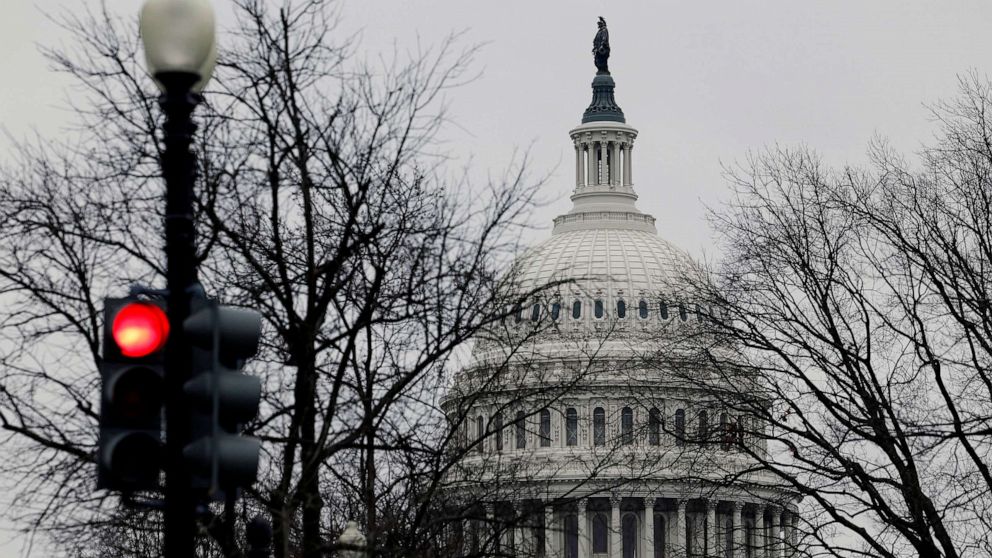 |
| PHOTO: The U.S. Capitol Building is seen, May 5, 2023 in Washington, DC. |
Subscribe to:
Posts (Atom)

